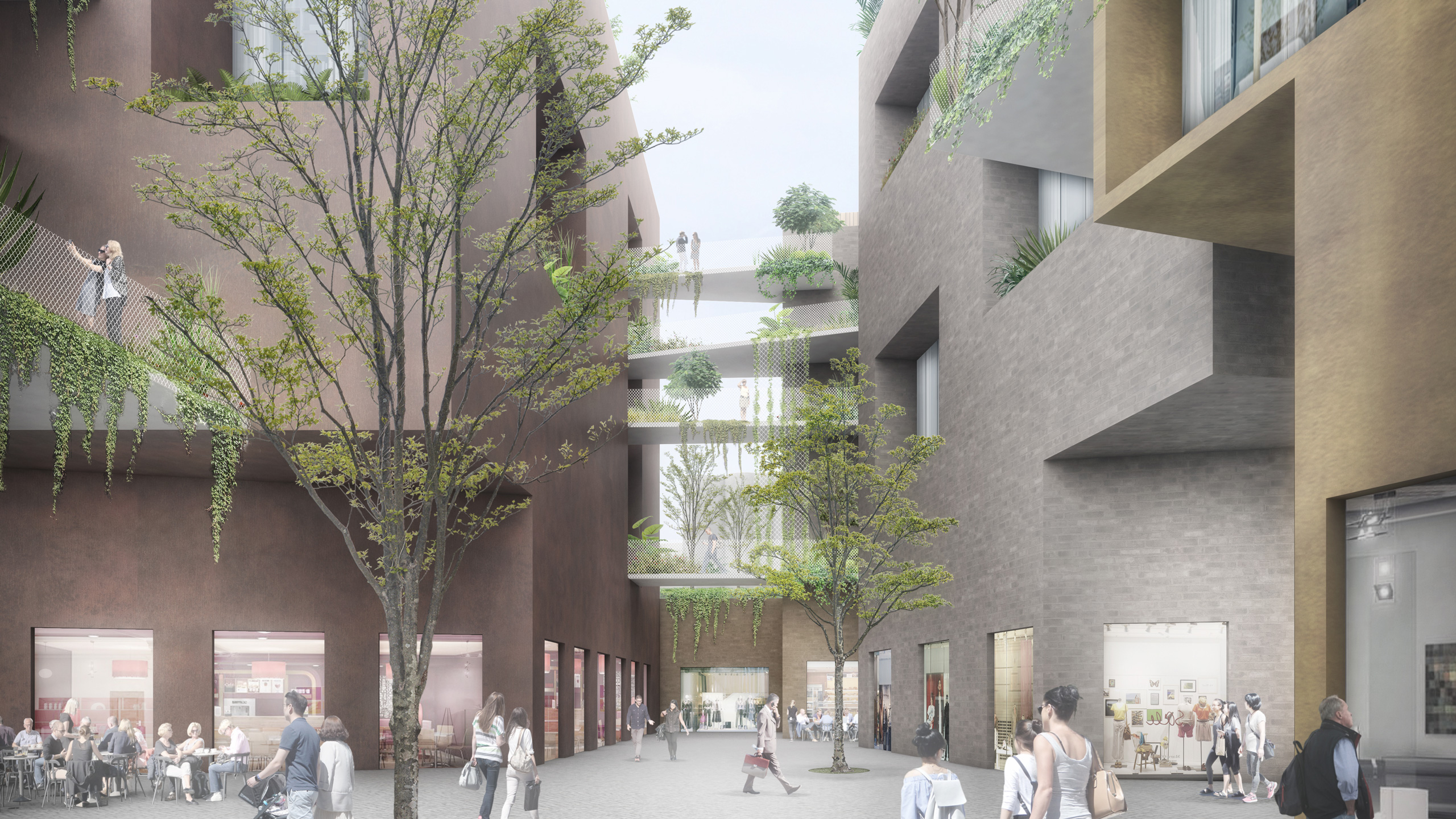
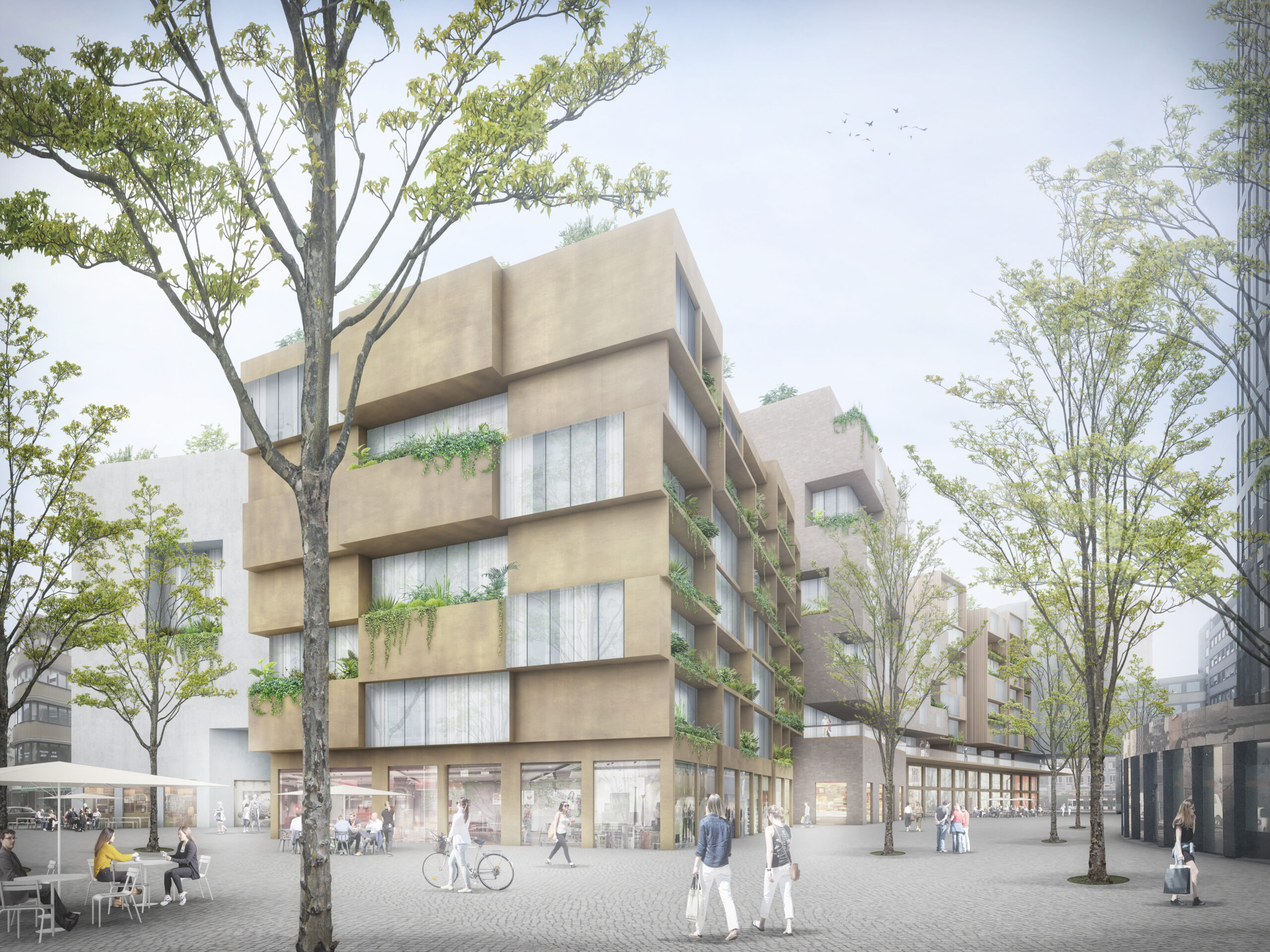
Westfalenforum – Re-think the Urban

Dortmund

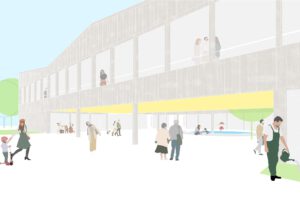
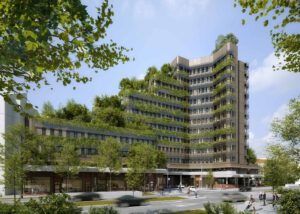
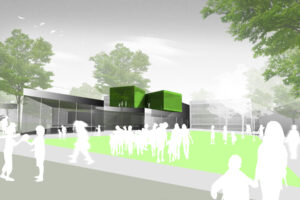
The era of inner-city shopping malls and shopping streets is coming to an end. New forms of retail and digital payment methods are making old-style shopping malls obsolete. This creates the opportunity to rediscover the city as a living space and give it back to the people. However, it is by no means possible to simply replace retail with housing.

Urbanity is created through plurality

This includes mixed uses as well as different residential typologies that promote real neighborhoods and generate identification potential for one's own “Kiez”. Sustainability, the lowest possible energy requirements, resource awareness from the limited building site to the selected building materials, mobility, etc. are self-evident aspects of the planning. However, the essential characteristic should be the creation of new places where people like to live.

A - Access

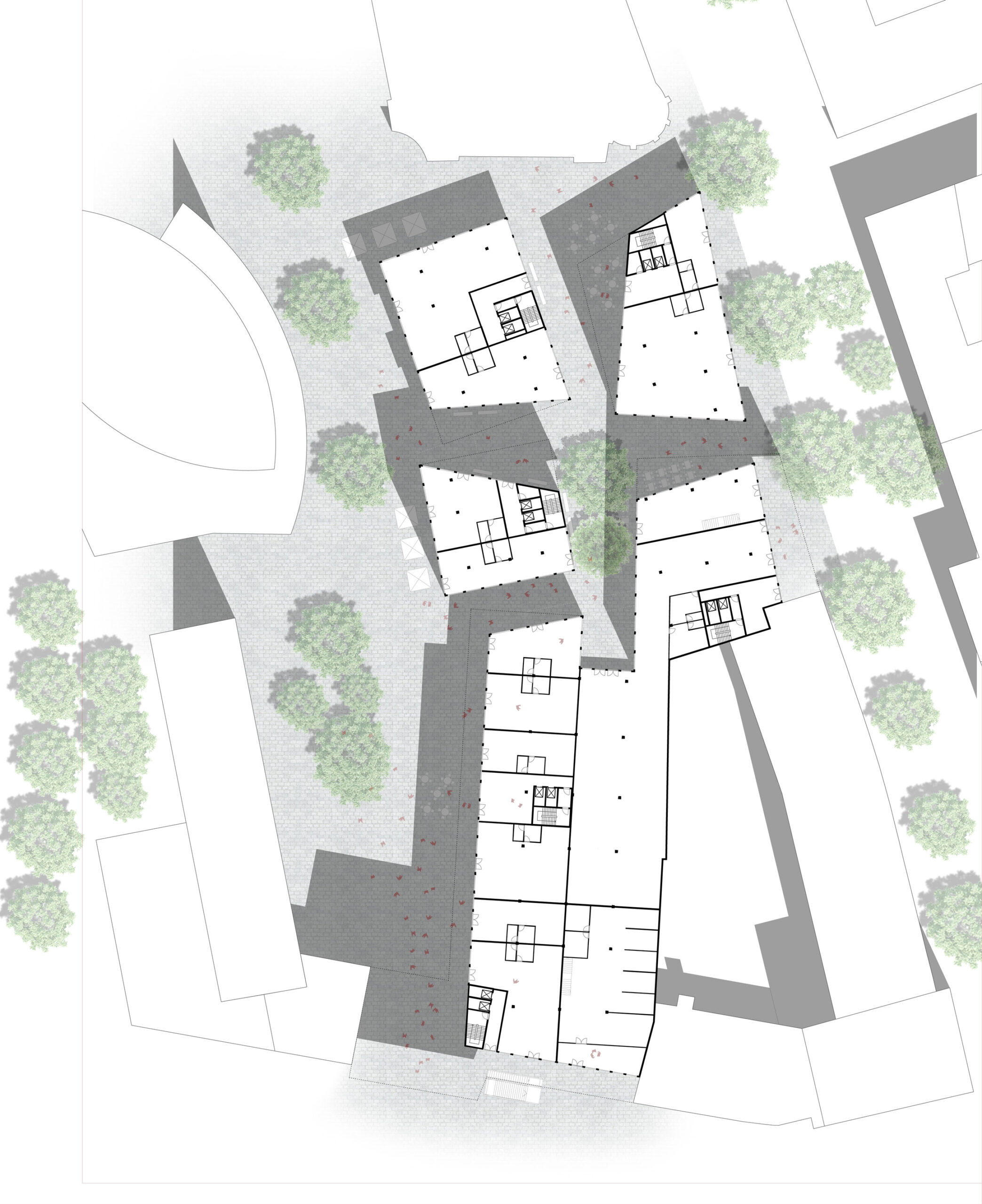
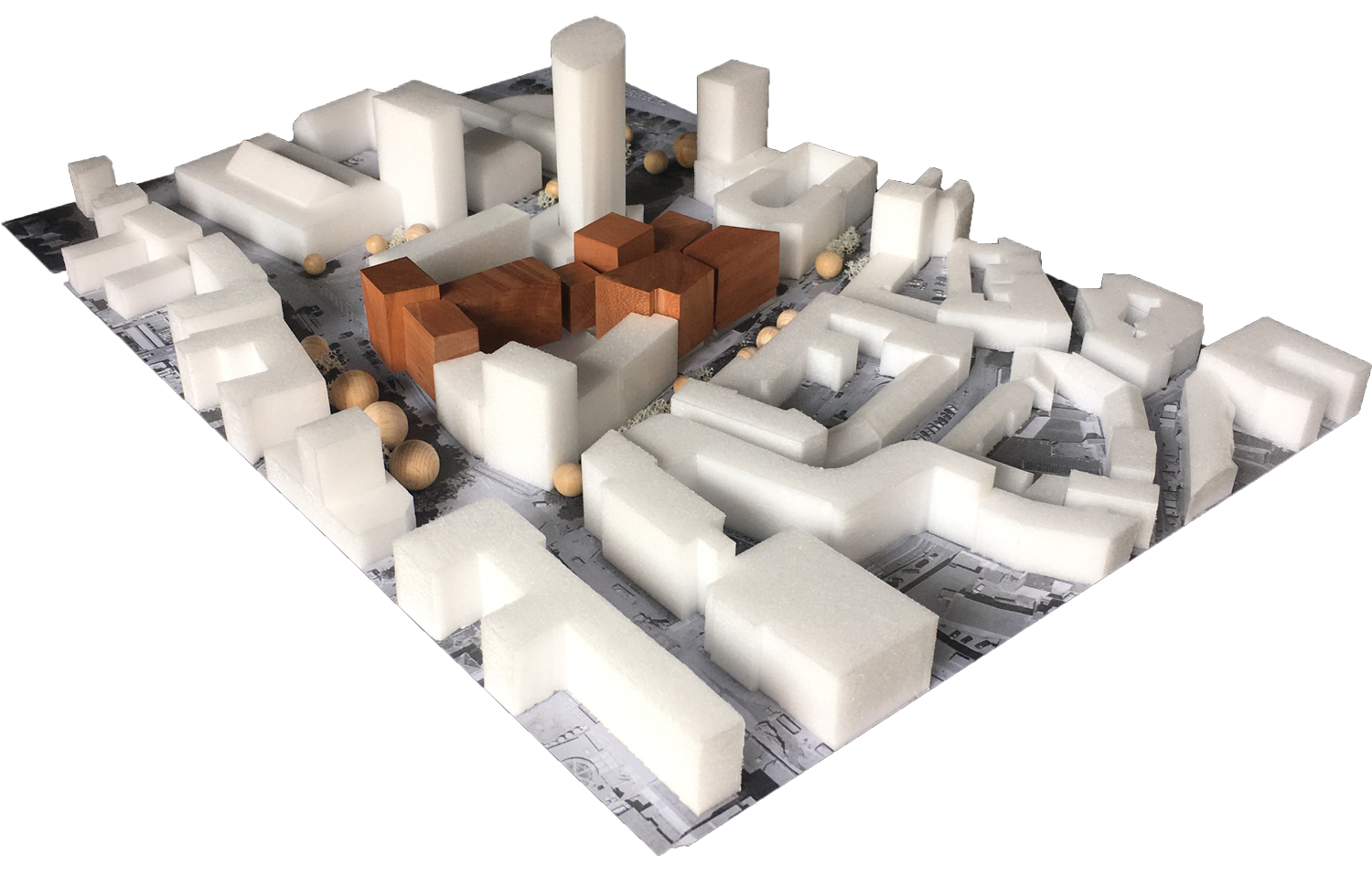
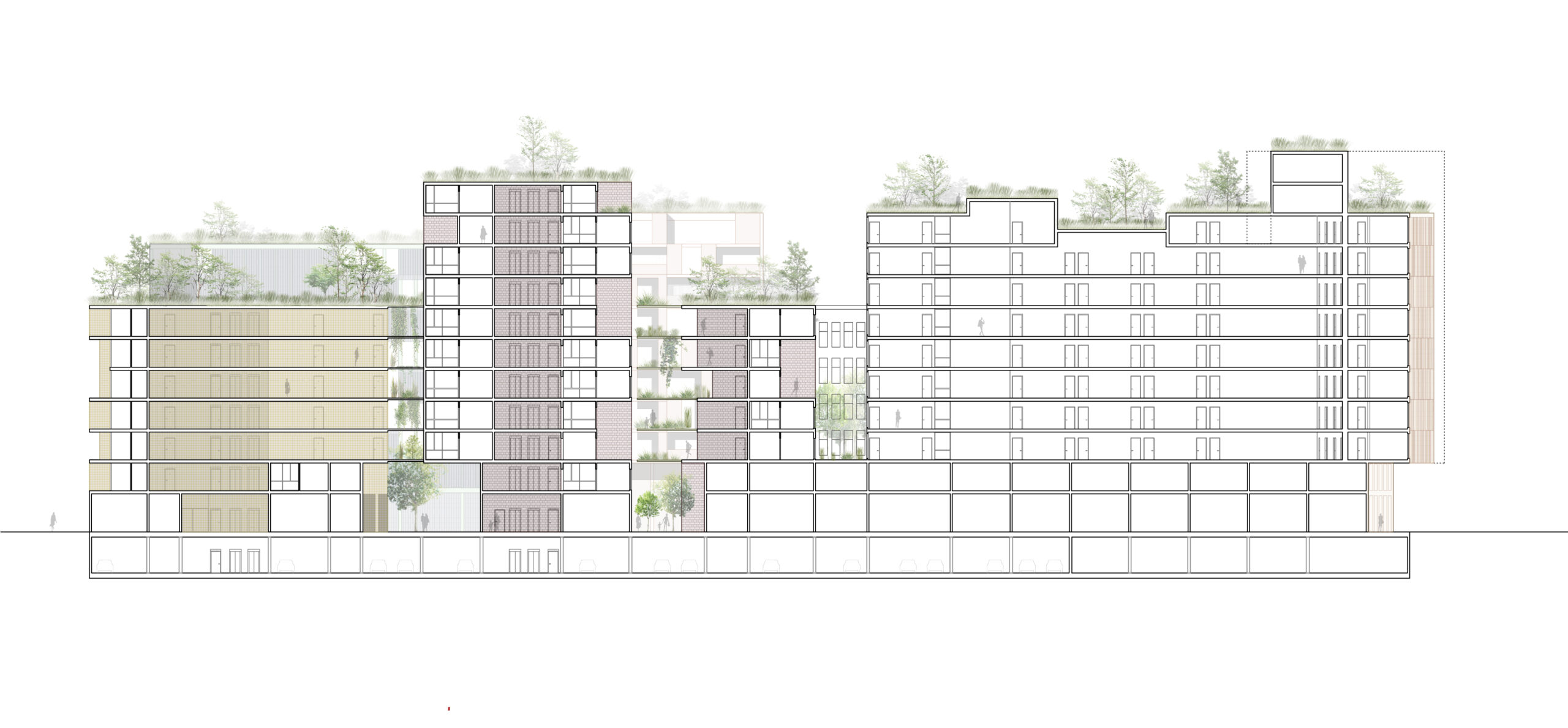
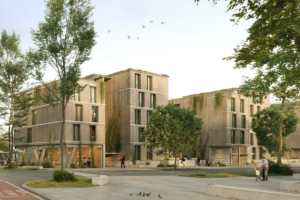
A group of buildings of different types with differentiated heights forms a new neighborhood. It is linked by public paths, alleyways and small squares - for access to the buildings, small-scale retail, eating and drinking or simply for spending time. The quarter is integrated into the overarching network of routes in the city center between the main train station, Westenhellweg and Marktplatz or Hansaplatz.

B - Mixed Use

The use of the buildings and floors will be mixed. Small, adaptable stores, cafés and restaurants will be created on the first floors, which can be extended to the first floor if required. Commercial uses will also dominate the first floor - offices, doctors and the like. The basement brings the buildings together under one floor and forms a continuous storey for parking spaces, technical rooms and other ancillary areas.

C - Sustainability

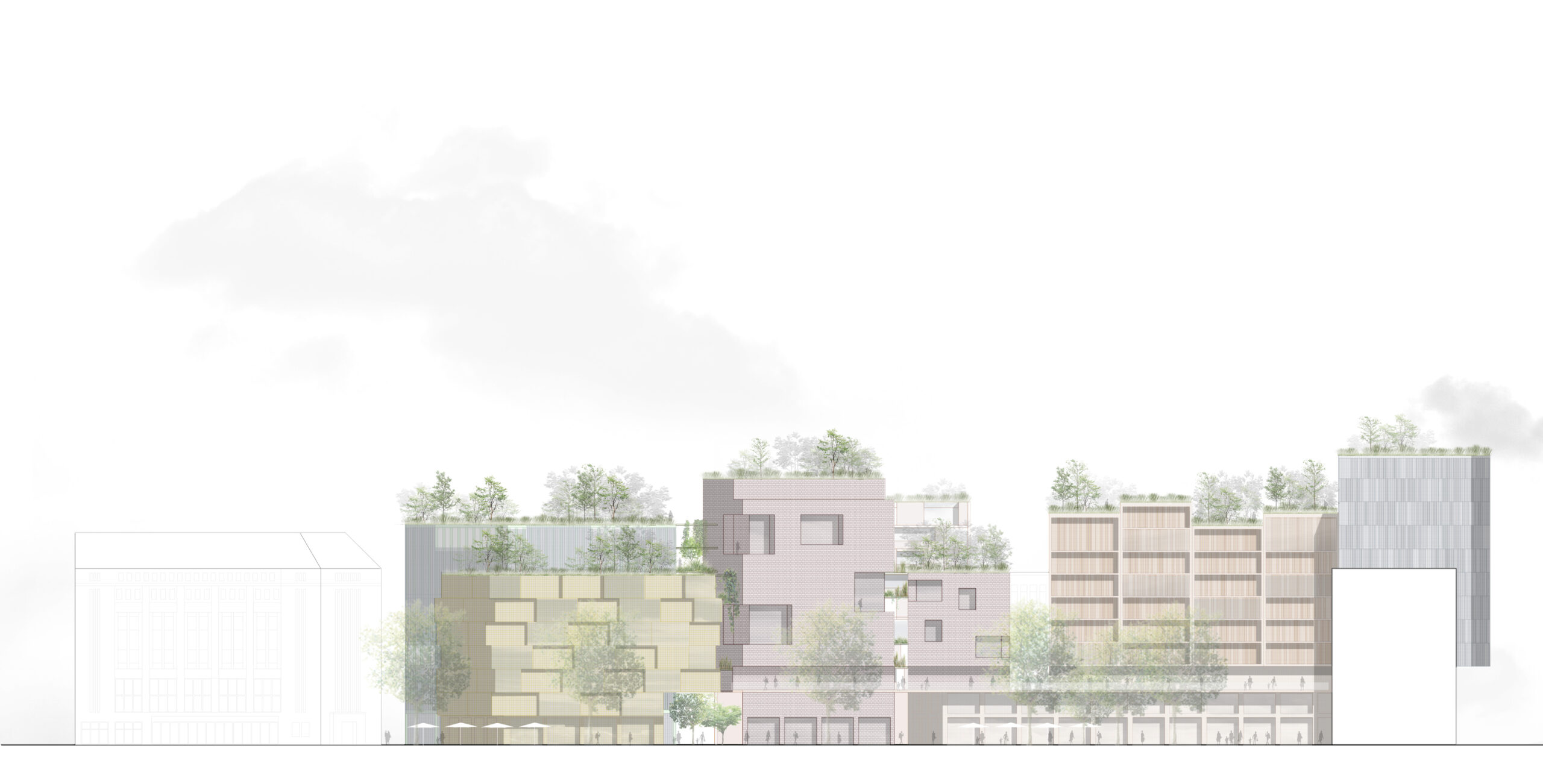
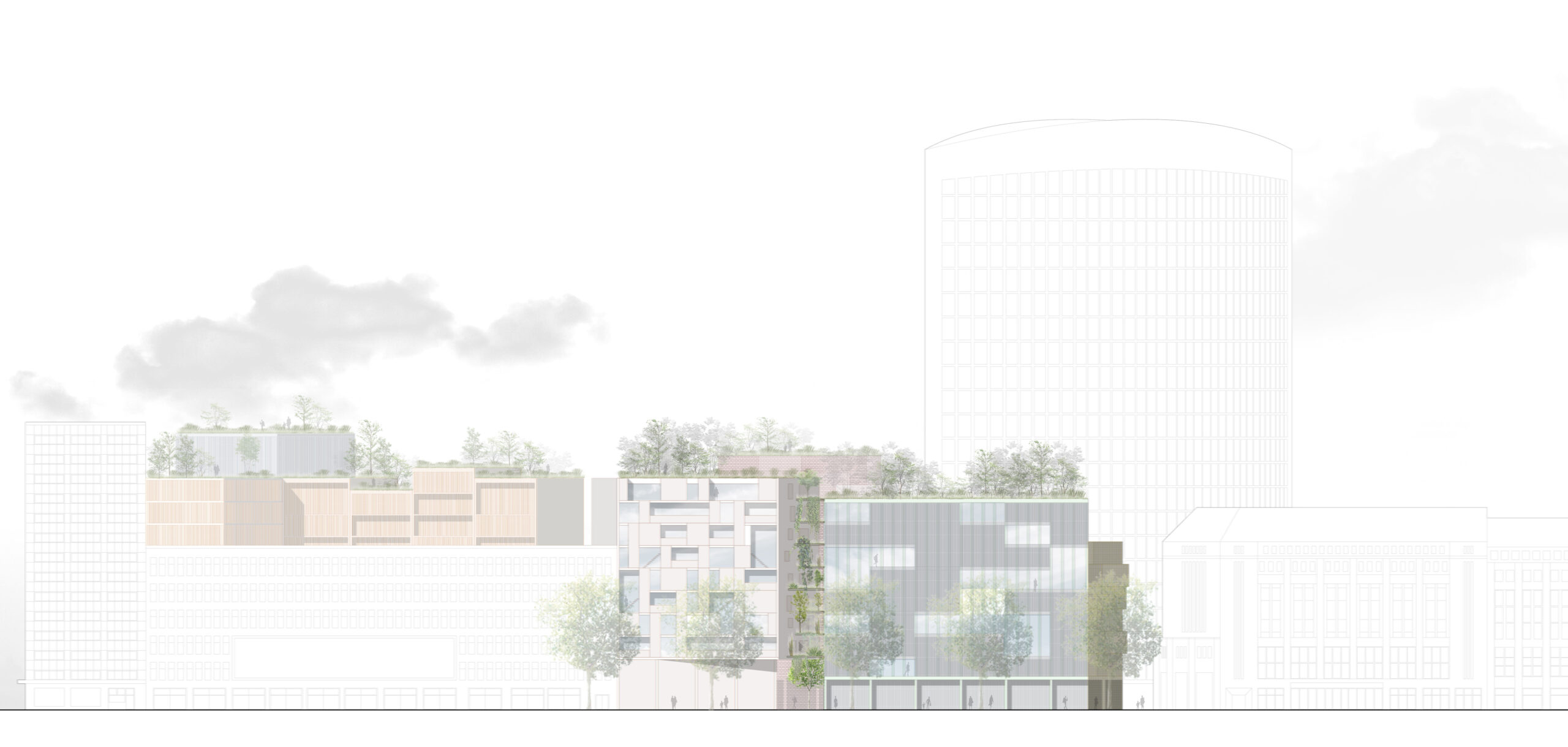
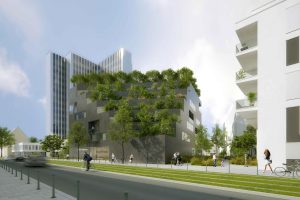
The use of materials, an efficient energy concept, short distances, the multi-layered linking of individual private and public mobility, social and cultural acceptance and other sustainability aspects are developed from the outset in a multi-professional team and brought together in an overall concept. A key starting point for us is the conceptual integration of an accessible green backdrop. As a structural break, it separates the floors with commercial use from those with residential use. It runs through the buildings, the courtyards, becomes denser at selected edges, recesses or terraces and gathers as a roof garden with bridges connecting all the buildings - a multi-storey park designed for the residents of these buildings.

D - Mobility

The group of buildings on Amiens Square is located in the immediate vicinity of Dortmund's main railway station with a variety of regional and national connections as well as direct access to inner-city public transport with buses and the S-Bahn. We will combine these options with a concept that ensures individual mobility - through an internal sharing system for e-bikes and cars that are available to residents. We expect to be able to at least halve the number of parking spaces required in this way. The remaining parking space requirement will be covered in the basement.
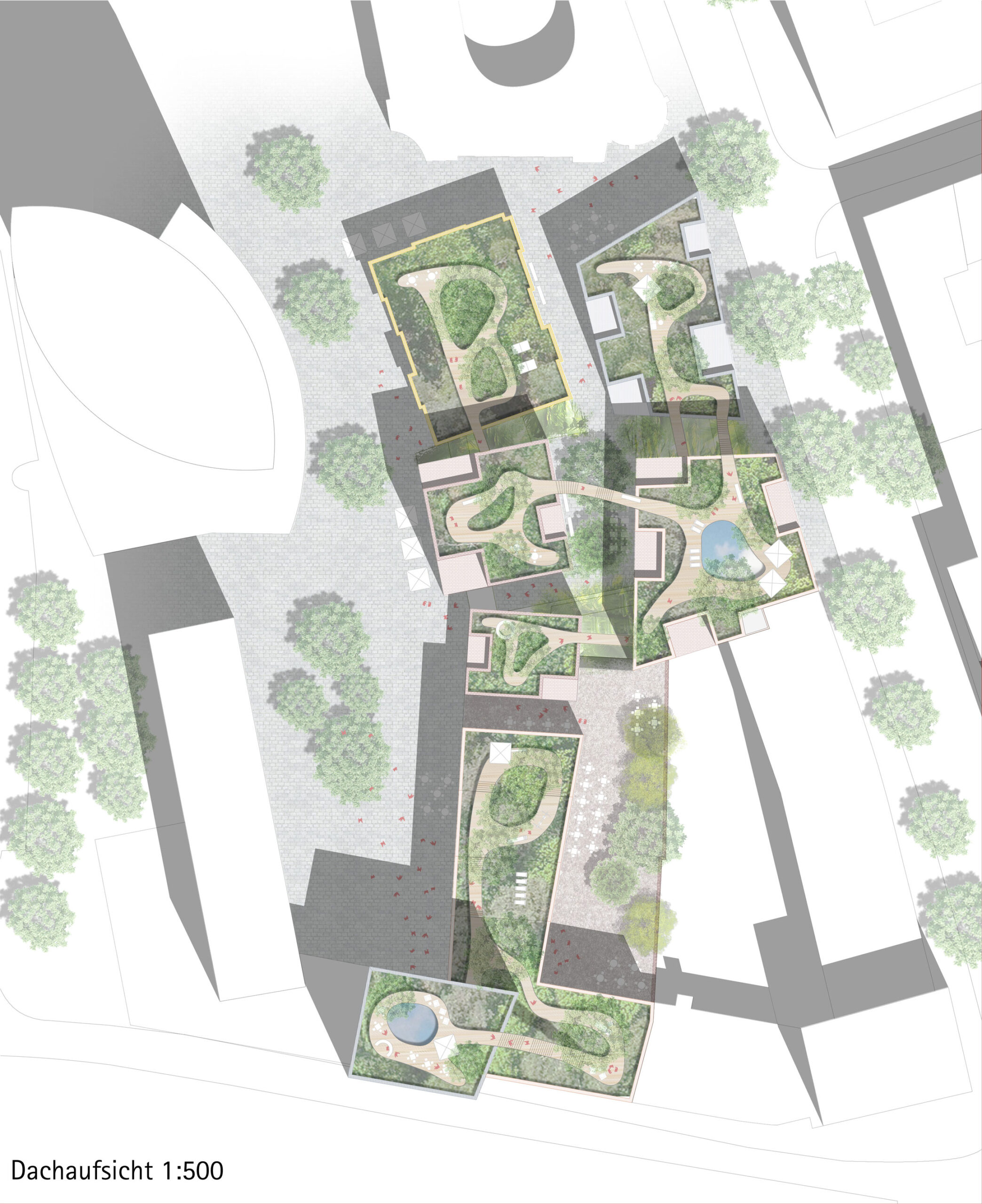
Site Plan
Floorplan Ground Floor
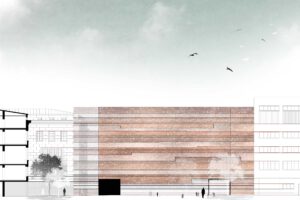
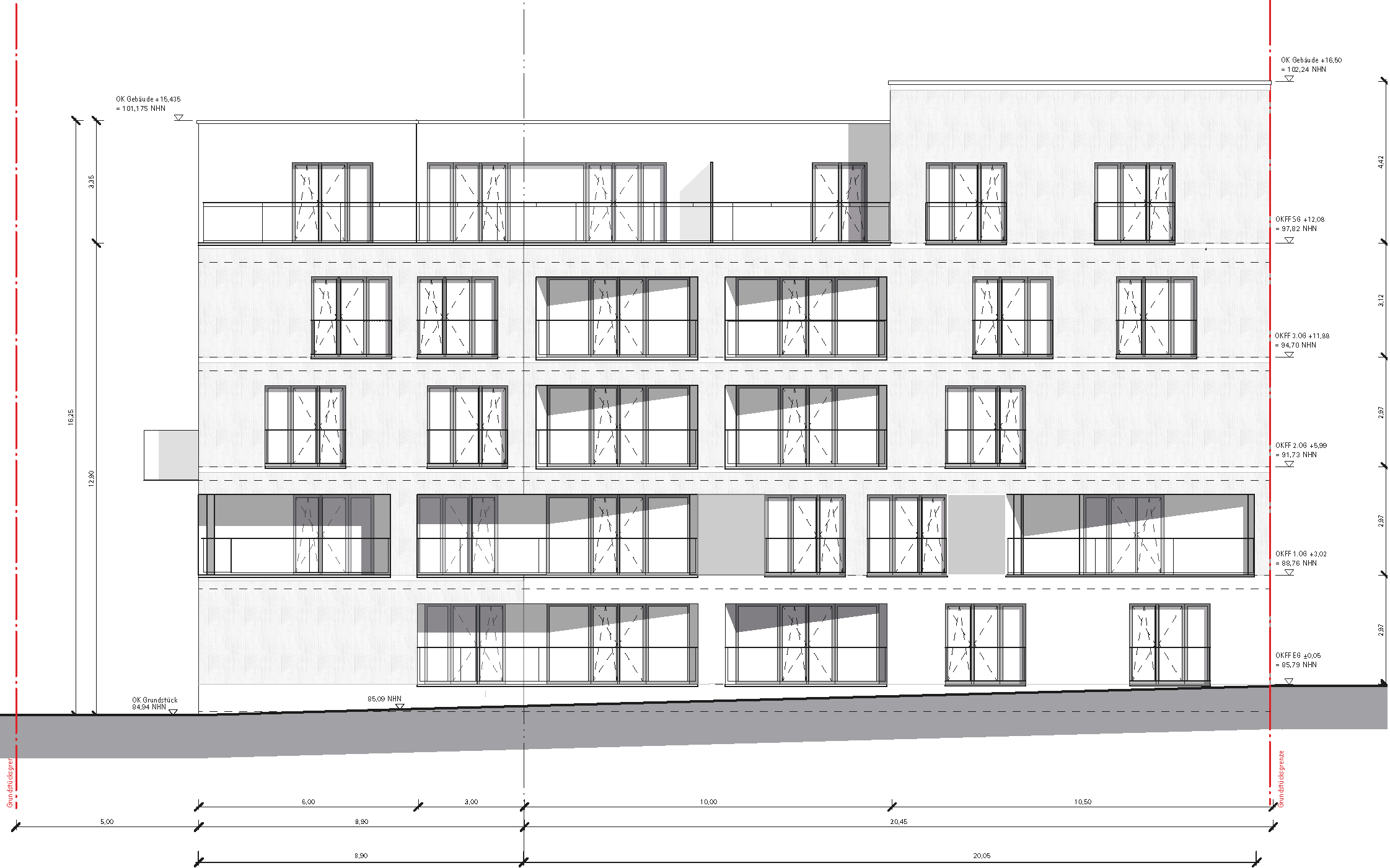
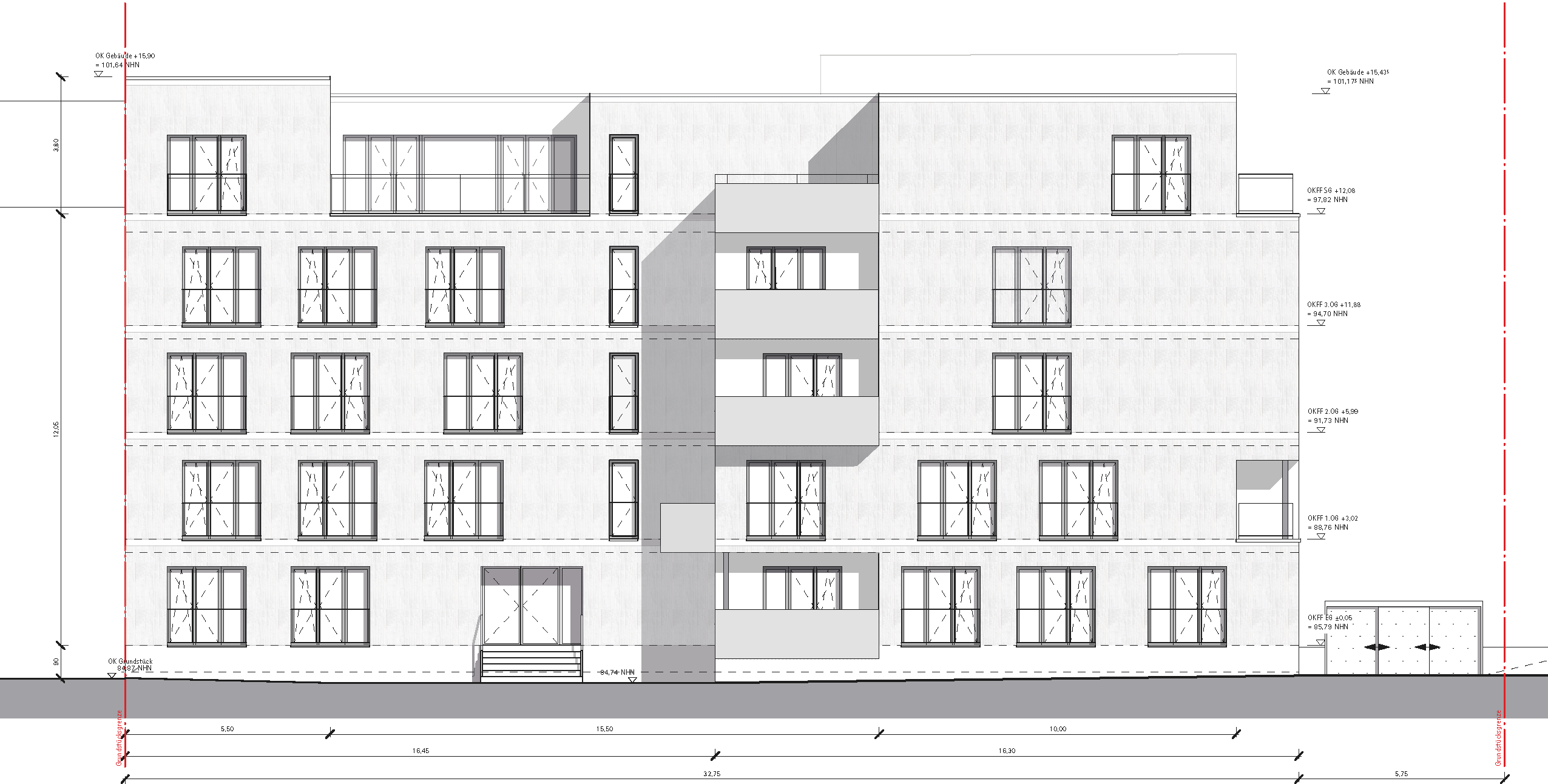
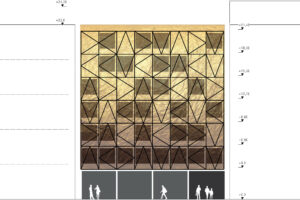
Elevation West

Data

Study

2017

Address

Kampstraße 37 - 39,
Hansastraße 5
44137 Dortmund
Germany
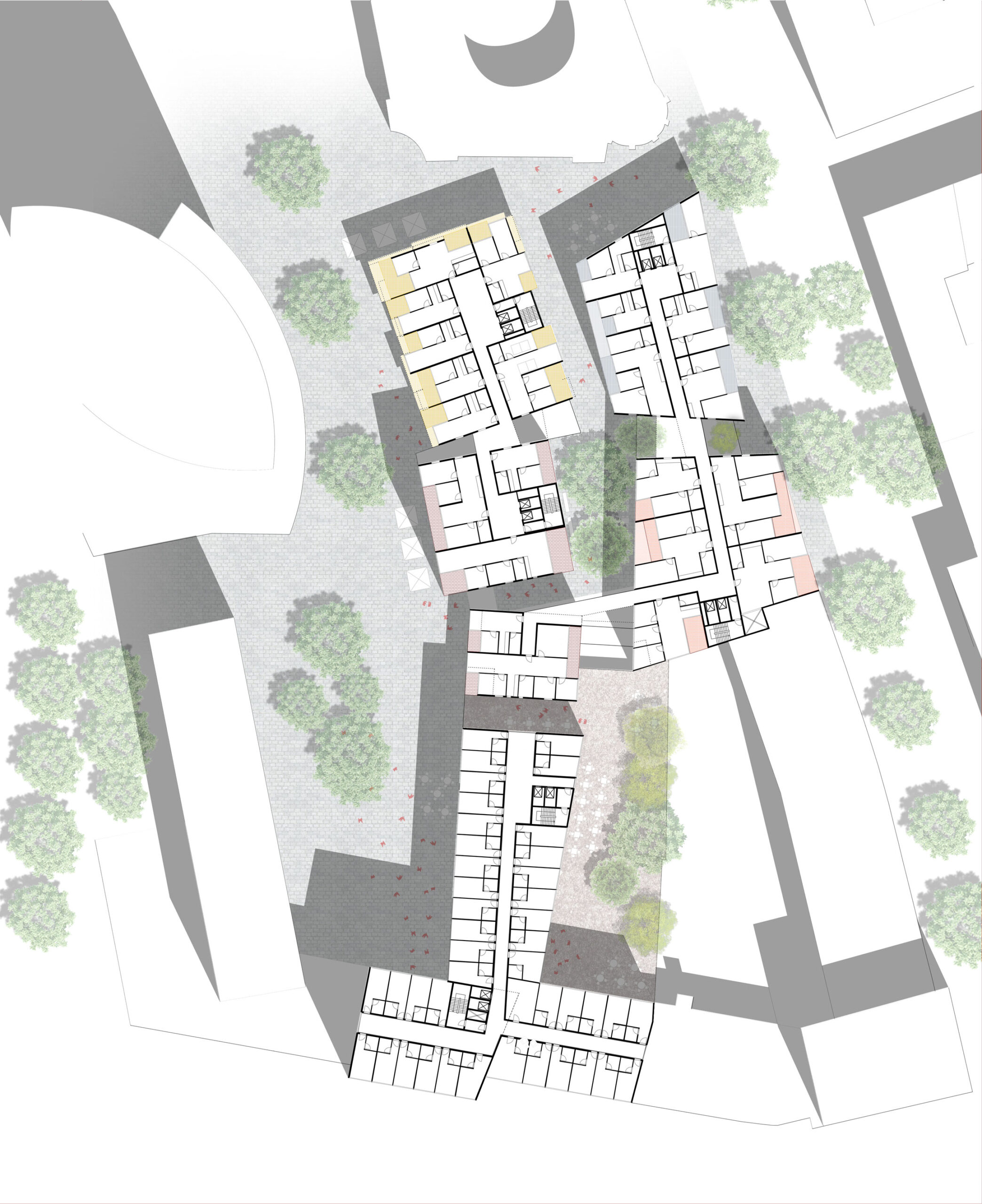
Floorplan Regular Floor
Elevation East
Longitudinal Section

Competition Urban Repair

Finsterwalde

The property at Leipziger Strasse 22-24 is located in close proximity to the historic city center, which is characterized by natural-grown, small-scale structures. The plots are clearly visible, the contours of the buildings are partly staggered, the roofs change in the eaves and ridge lines, and are strongly contoured in some places due to superstructures. Opposite the property is Mozartplatz, an area that is currently undeveloped.
Differentiated structure analogous to the urban grain

The neighbors along Leipziger Strasse and Weststrasse face the street with designed gable surfaces, bay windows, and dormers; one could say they are talking to each other. We adapt this lively formation, break up the new structure, and follow the course of the street with the building edges at different angles. This creates a differentiated structure analogous to the urban grain in the historical context. The buildings remain legible, the addresses recognizable, significant, and yet easy to construct. The number of stories and eave height follow those of the respective neighbors. Above the eaves, a roof landscape is modeled that allows for maximum usability of the attic floors and privacy at the same time through an interplay of dormers and loggias. The aim of the concept is to create living spaces with high density, high privacy, and low energy requirements.

Courtyard - Living with Nature

Children play in the fresh air and the fire pit is the place for spontaneous or planned celebrations. Here, a shady courtyard is to be created as a green lung for the community, surrounded by open vertical access and loggias – like stands around an open-air stage. It will become a landmark. The building entrance on Leipziger Strasse, on the other hand, is framed by two cantilevered volumes, which form a small forecourt.

Apartments and spaces

The apartment sizes are based on the required matrix. They are largely flexible, with lightweight partition walls that can be moved; only the shafts form fixed points within the floor plans. In some places, the connection of individual or several rooms is planned and marked in the floor plan drawing. The ratio of rental space (MF) to gross floor area (GFA) is approximately 73%. The entrances are barrier-free. Adjoining rooms for strollers, bicycles, and trash are located near the building entrances or in the basement.

Architecture + Construction

The basements are limited to a reasonable size, set back from the neighbors' gable walls, but accessible from both stairwells. This avoids undermining the neighbors' foundations. The floor plan concept contains few fixed components (shafts, columns, or walls). The type of construction allows for a certain degree of floor plan variability within the supporting structure and enables different layouts – from one-room apartments to four-room apartments. In the present layout, we propose 19 residential units on approximately 2,070 m² of gross floor area: (5 x 2-room residential units, 11 x 3-room residential units, and 3 x 4-room residential units). The buildings are designed to be resource-conscious with a minimal carbon footprint.

Floor Plan Ground Floor

Daten

Wettbewerb

Teilnahmewettbewerb
07.2024

Adresse

Leipziger Straße 22-24
03238 Finsterwalde
Deutschland

Bauherr

Wohnungsgesellschaft
der Stadt Finsterwalde (WGF)

Section B-B
Section C-C

Housing Construction in the Ruhr Area

Dortmund

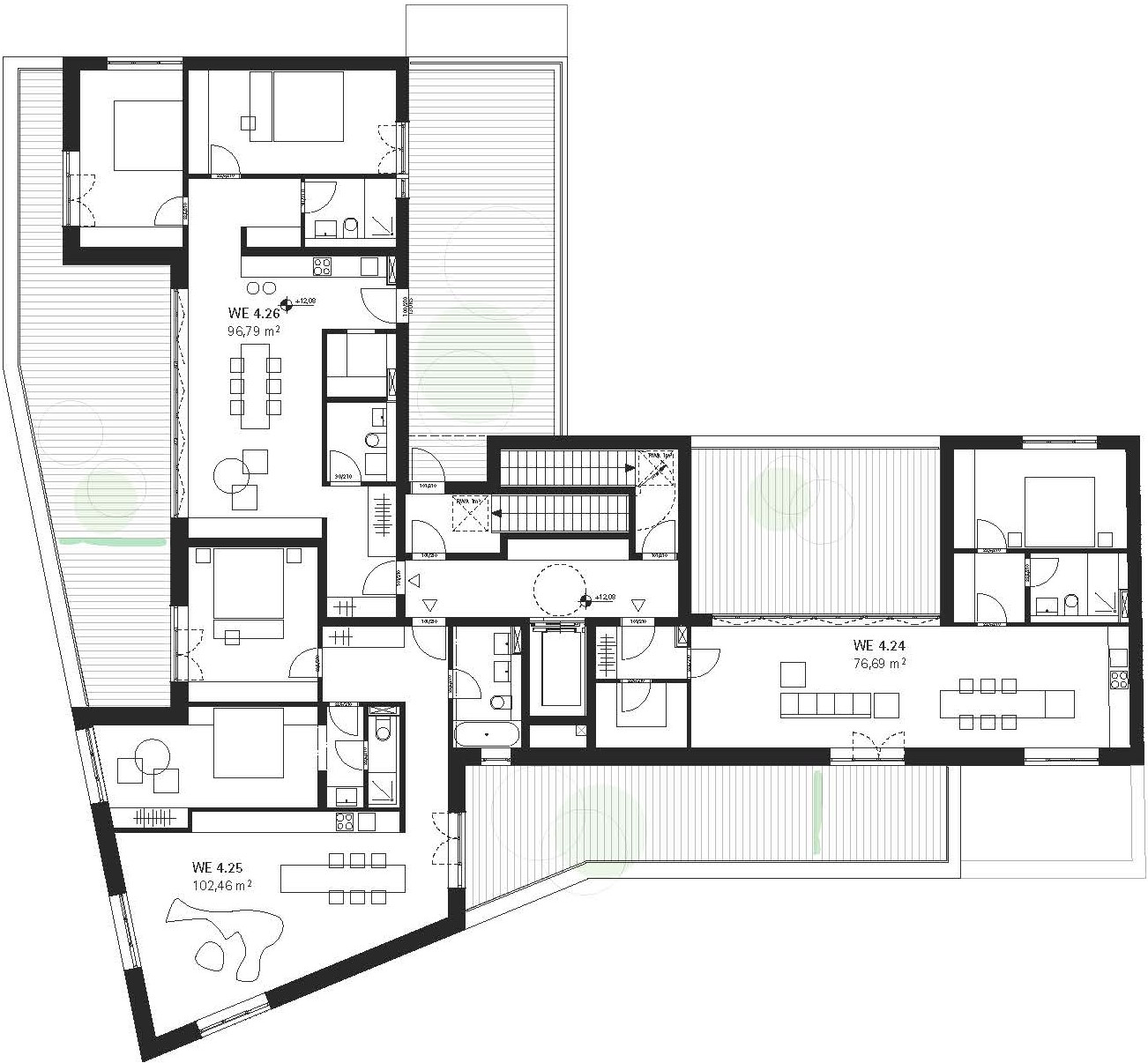
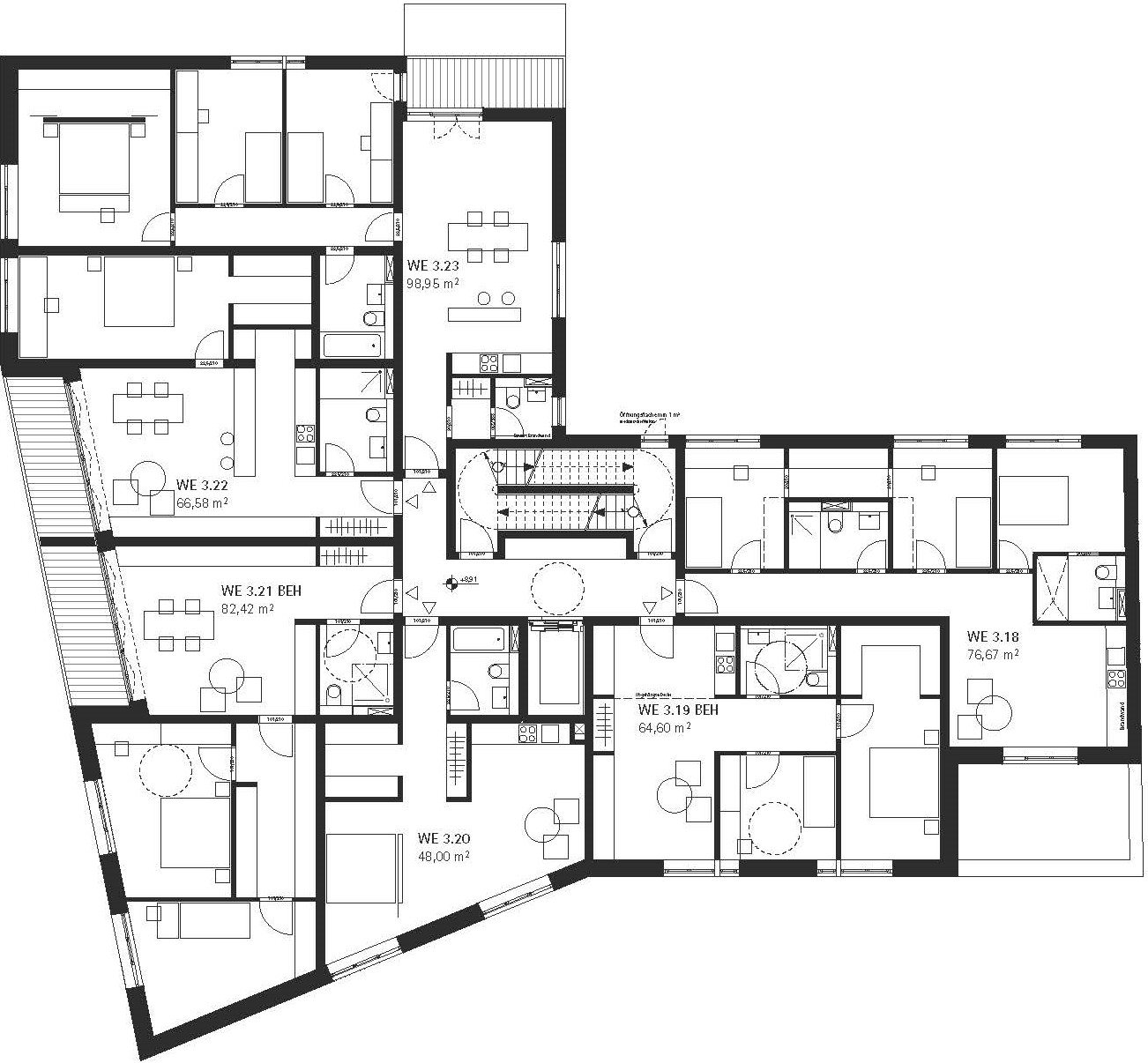
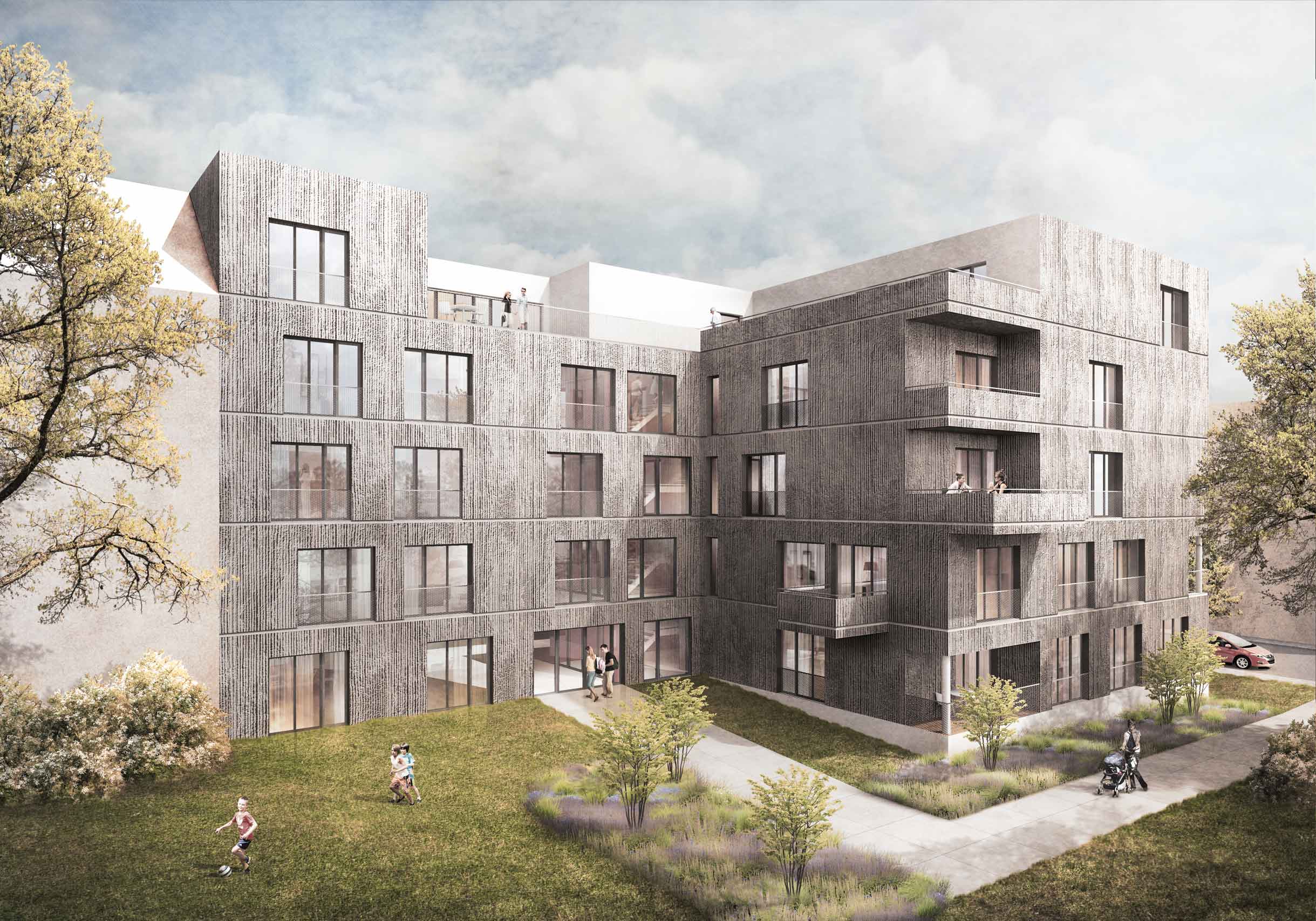
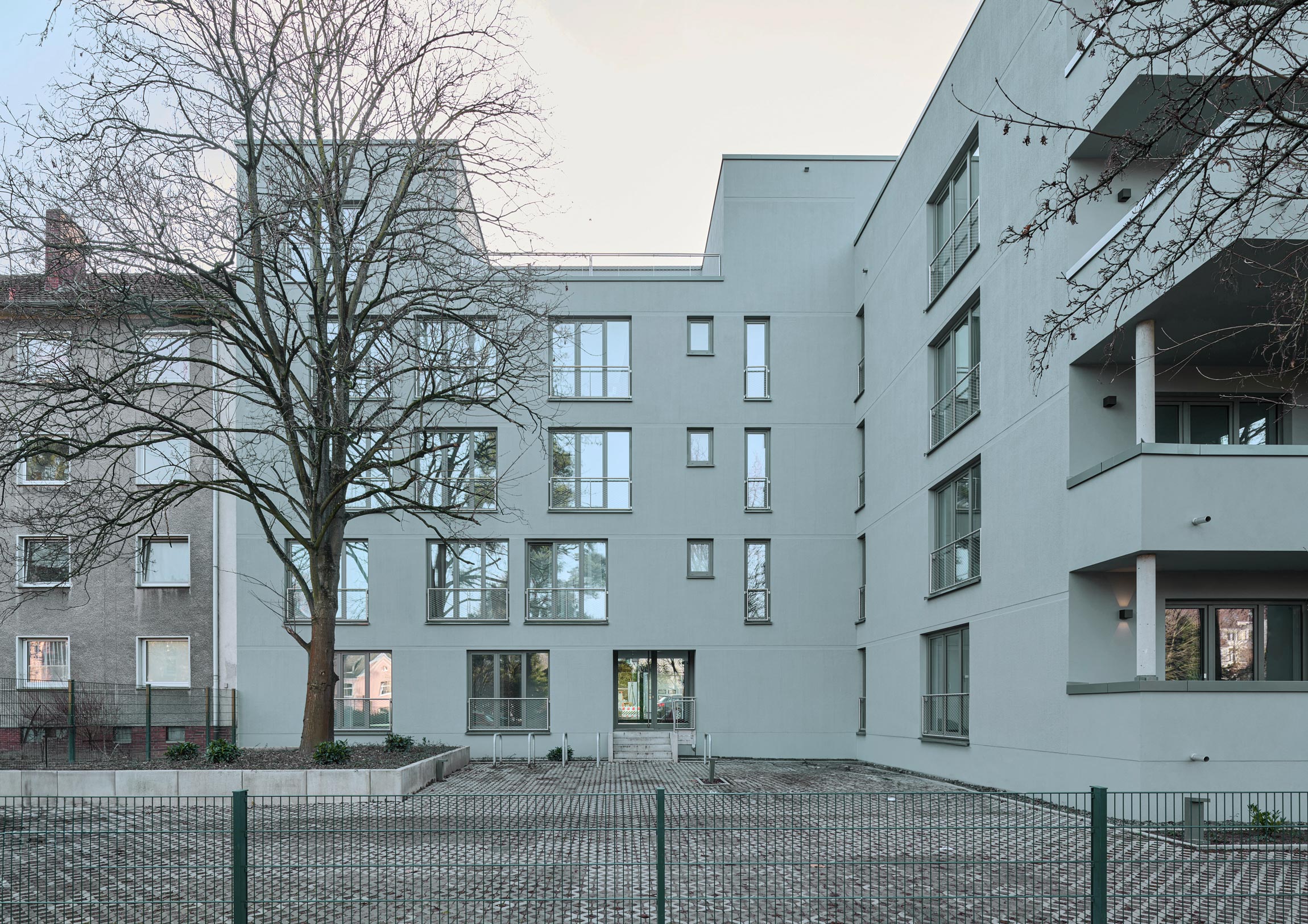
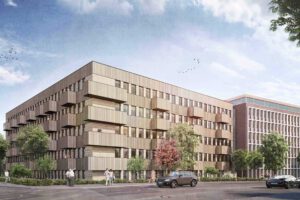
The inner-city location is ideally suited for different groups of residents: young families, older people in small apartments or in shared apartments 50+, students in apartments or shared flats. A building that offers different types of apartments under one roof and thus provides the basis for a real house community. Access to the upper floors and the functional areas on the ground floor is via a central foyer with deliberately spacious circulation areas, which are available to the building community as a protected space for private events, children's play, etc. - as is the garden itself.

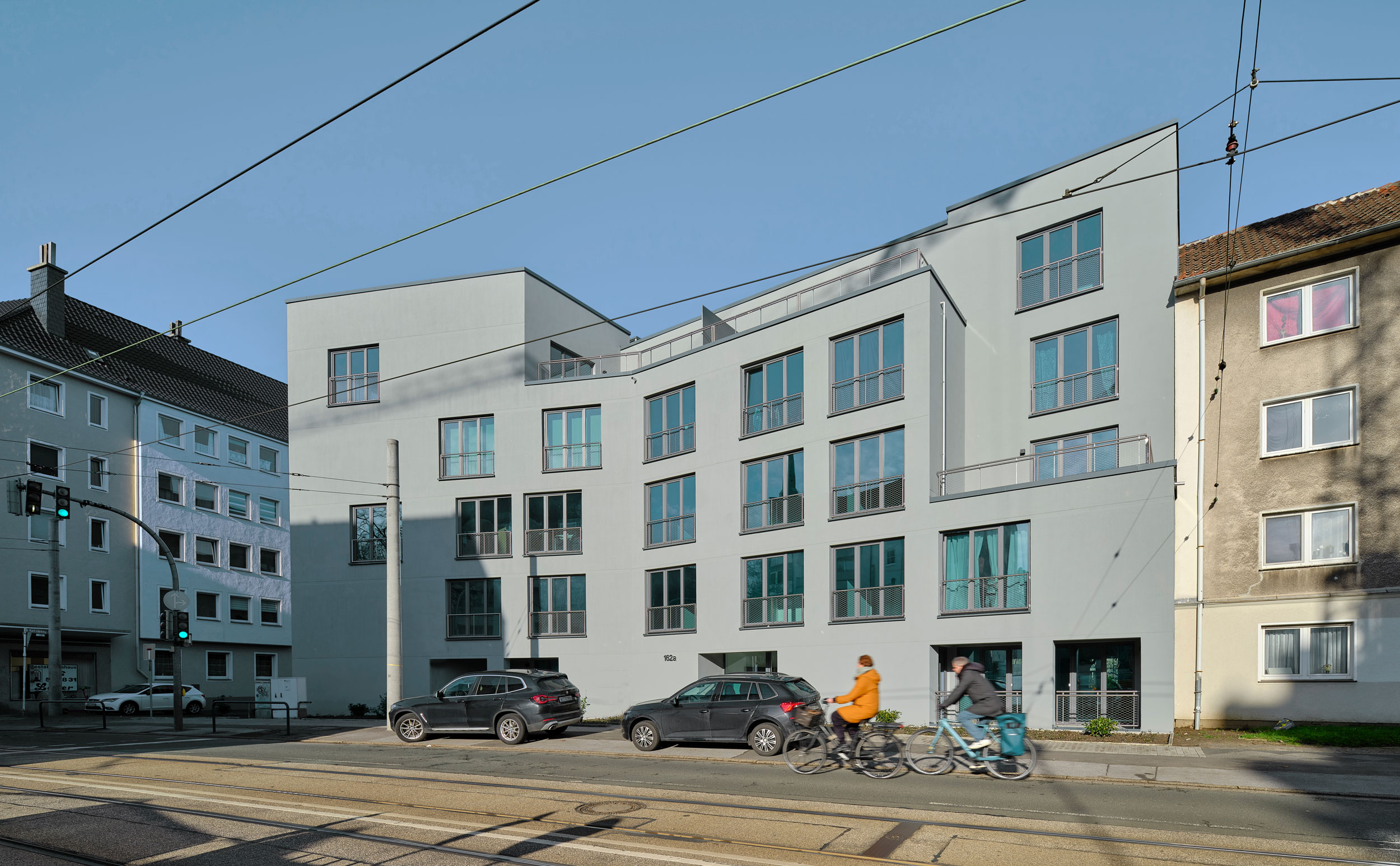
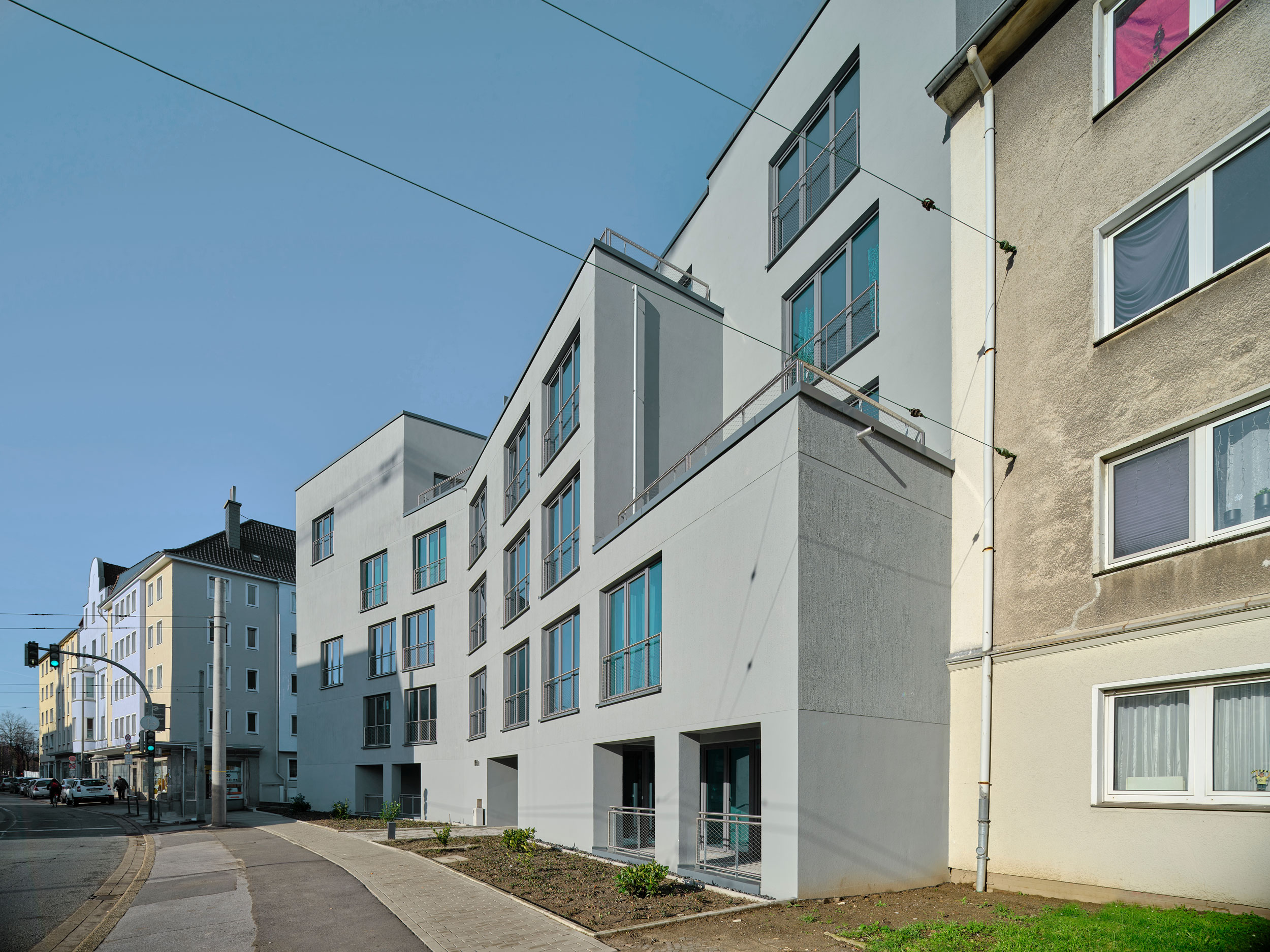
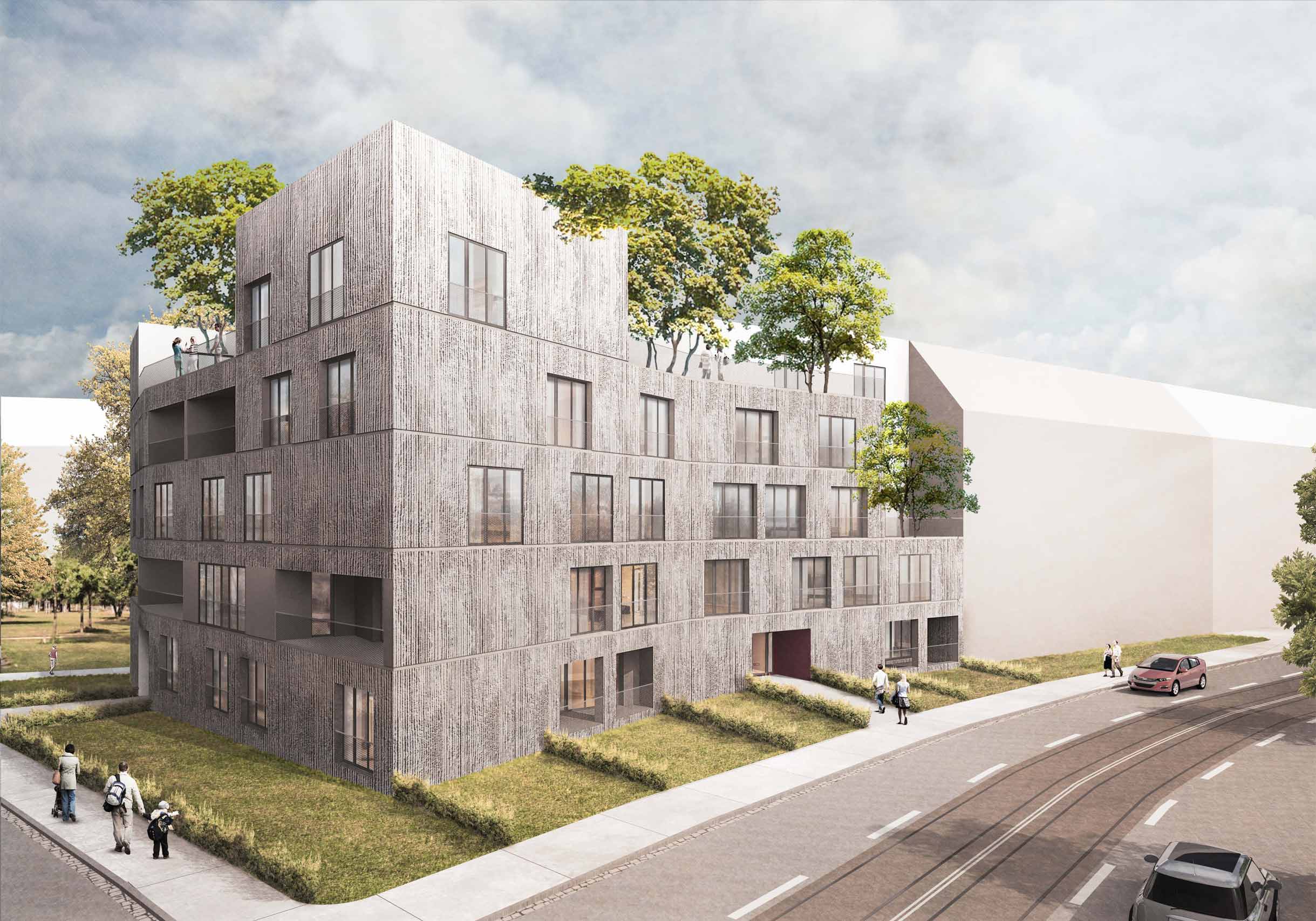
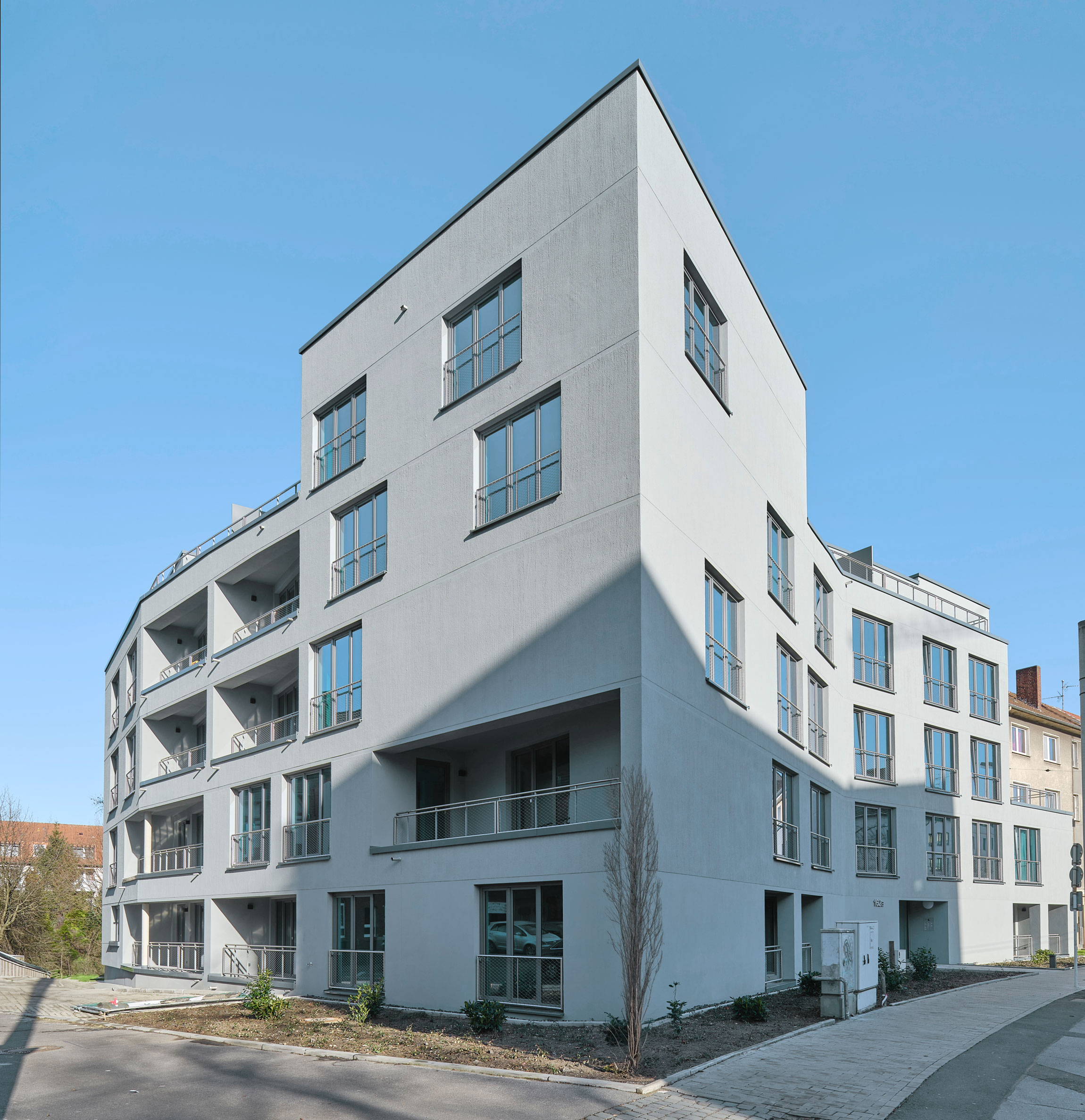
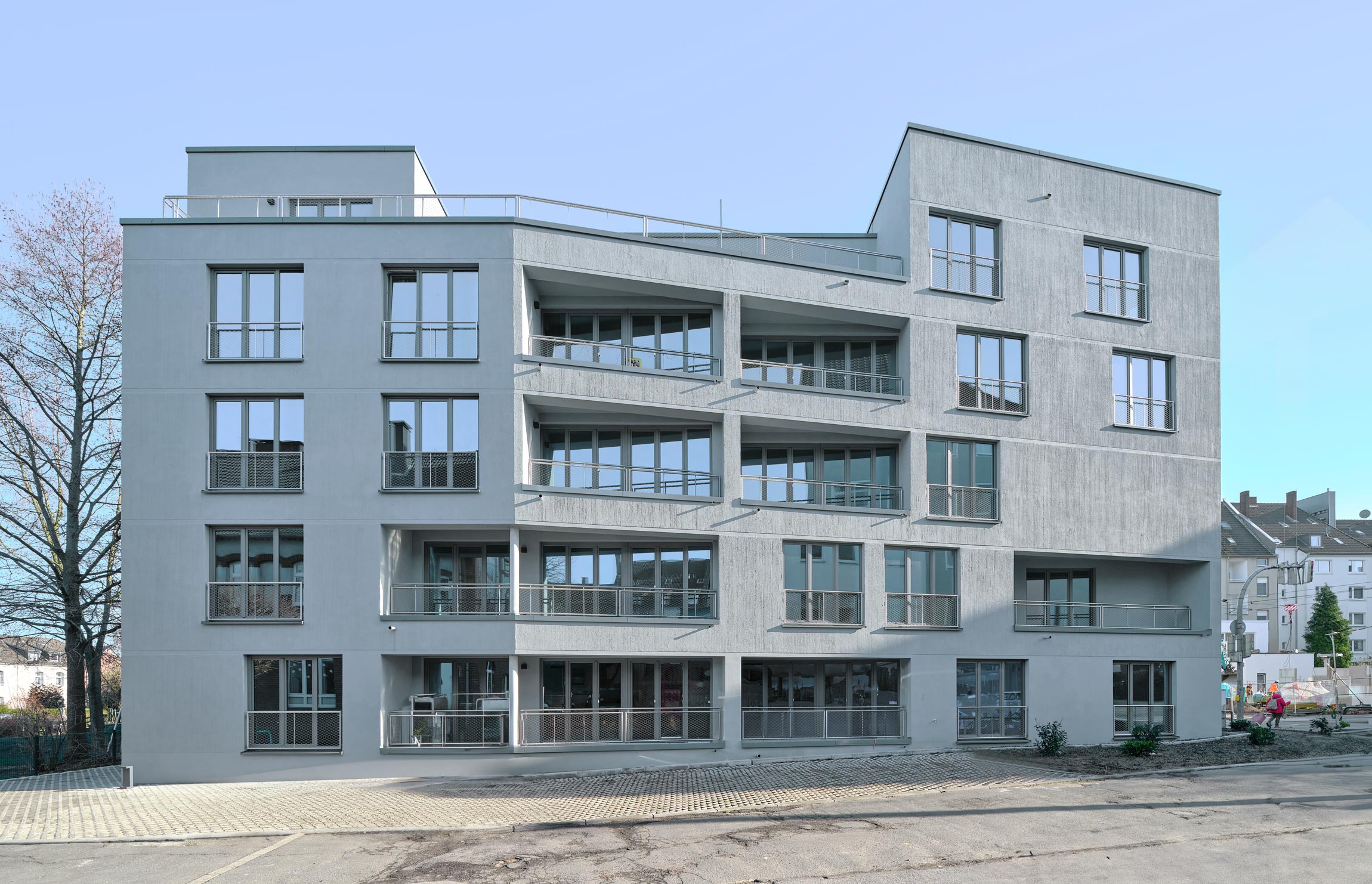
“High Density - High Privacy - Low Energy” is the theme of the architectural language. The building structure is compact, the circulation areas are equally yet communicative, the residential units have a differentiated typology and the largest possible private open spaces. All window areas are based on the same basic module, but their handling is adapted to the respective floor plans.

All necessary infrastructural facilities (waste management, storage rooms, building services, etc.) are housed in the building. This leaves the open space around the building tidy and reserved for garden use - with a direct link to the neighboring public green space.

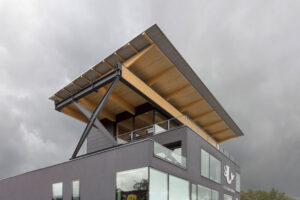
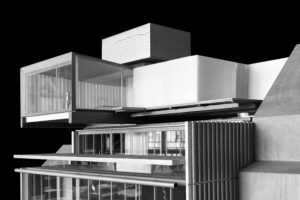
The building has four upper storeys and a staggered storey with penthouses to clearly articulate the urban contours. It has two independent entrances/exits. All floors are barrier-free and some of the apartments are handicapped accessible.

The first and second escape routes are routed via stairwells, which are located on the outer wall as nested staircases with minimal space requirements and are ventilated at the top.

The primary load-bearing structure consists of reinforced concrete ceilings laid on masonry walls. The ceilings are free of joists and are smooth and undisturbed from below. The masonry of the outer wall is monolithic (highly insulated) - with an additional mass shell for sound insulation towards Kaiserstraße and Karl-Lücking Straße. It remains open to diffusion throughout its entire construction. The surface forms an interplay of coarse and fine plaster textures. The floor plans are largely column-free. The space is created by non-load-bearing partition walls.

Floorplan Attic Storey
Floorplan Upper Floors

Data

Completion

2024

Address

Kaiserstraße 162
44143 Dortmund

Client

Kreuzviertel Liegenschaften GmbH

Partner

Building physics/acoustics: 
IB Horn GmbH, Leipzig
Fire protection:
Neumann Krex + Partner, Meschede
Technical building equipment:
Ingenieurbüro Deuter GbR, Iserlohn

View West
View North

Restructuring Old Piano Factory

Berlin

Sustainable architecture means creating possibilities.

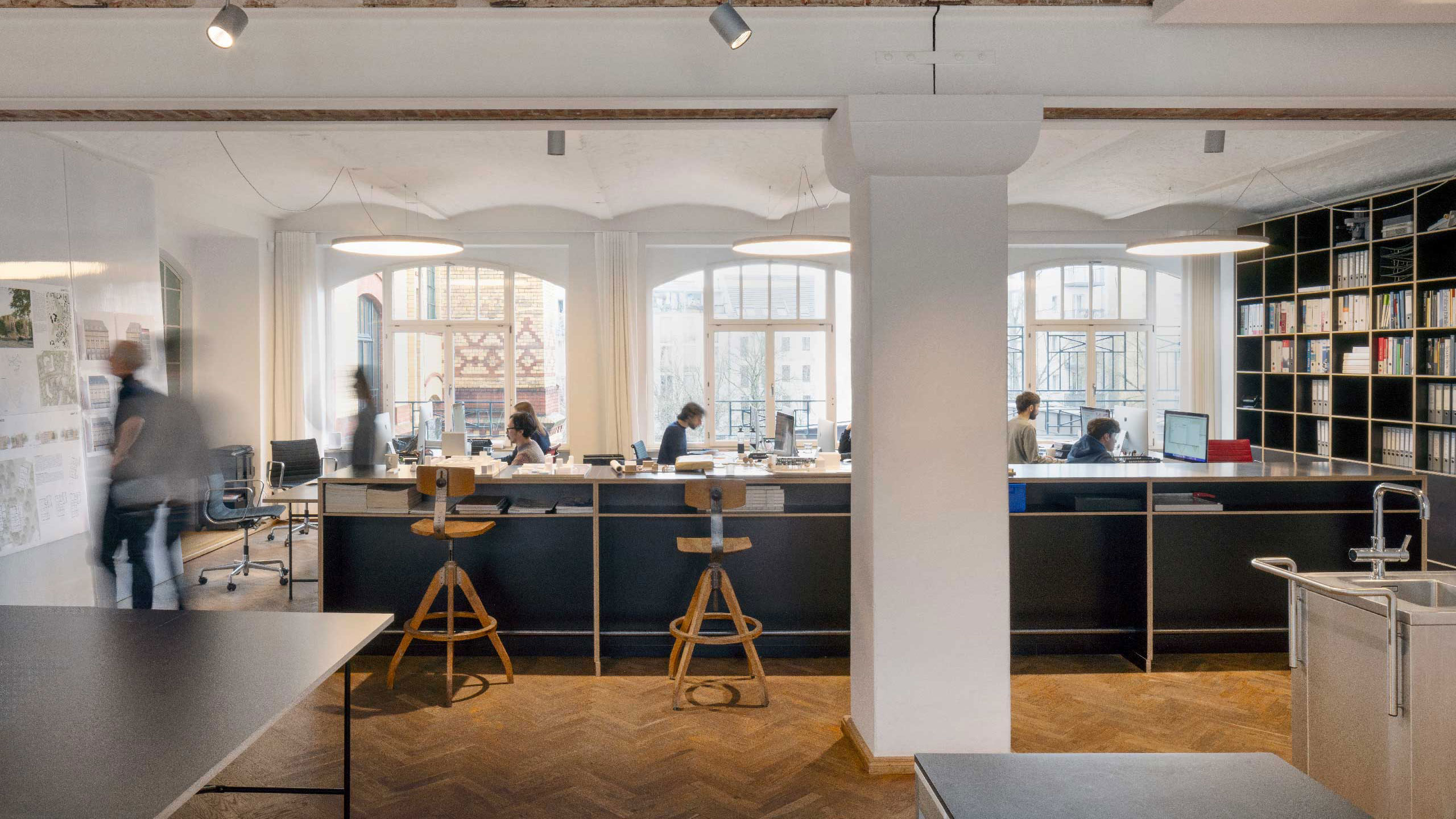
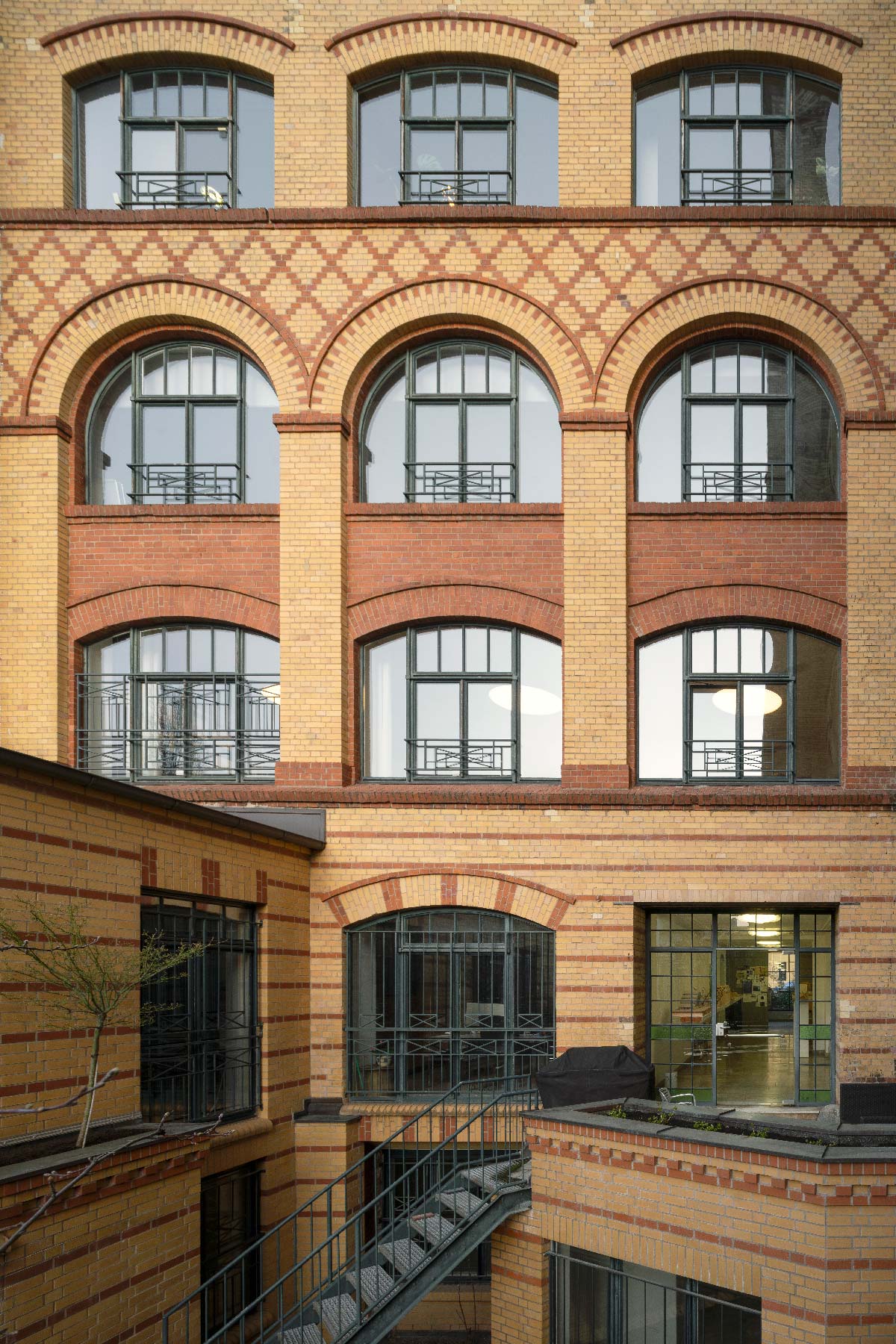
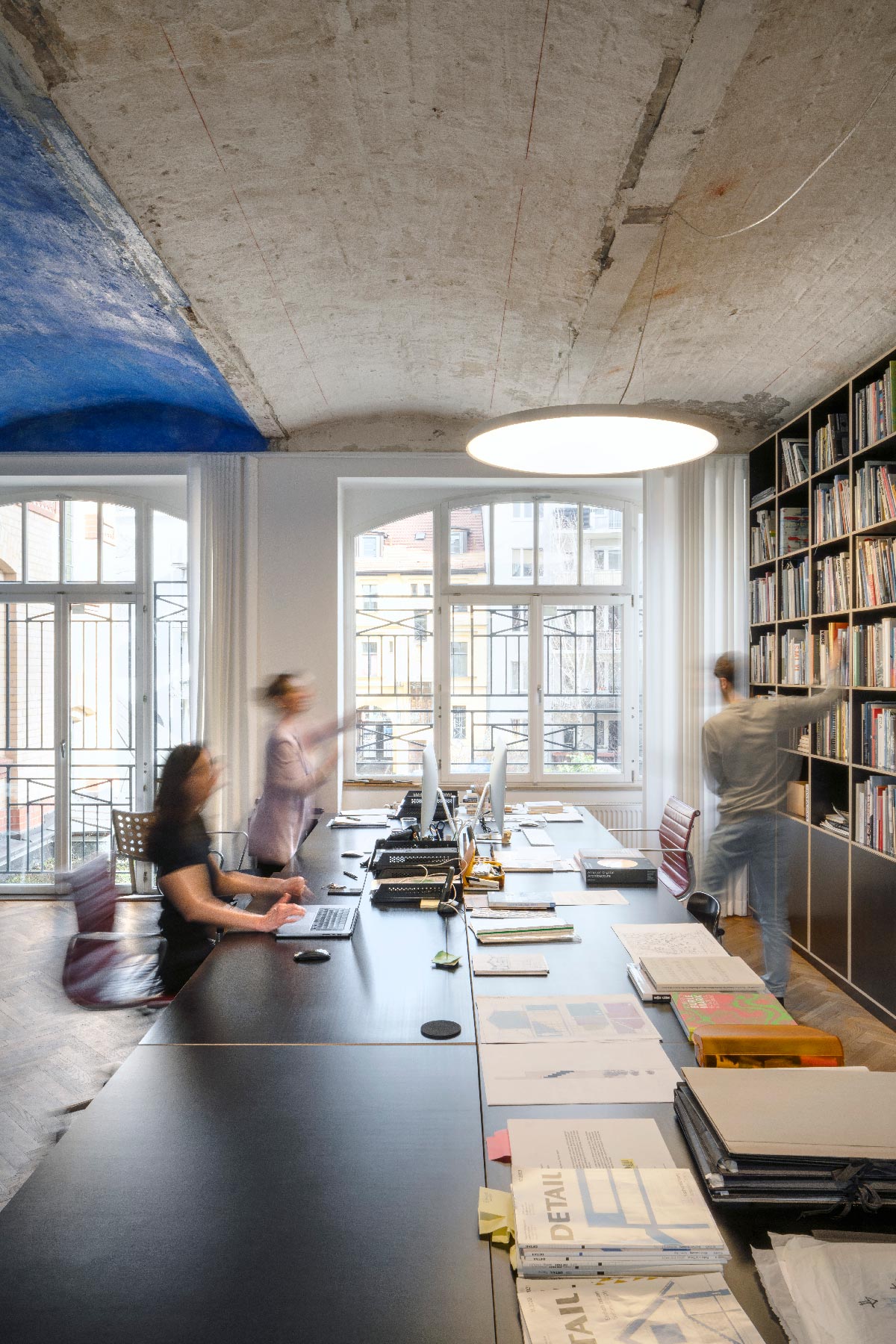
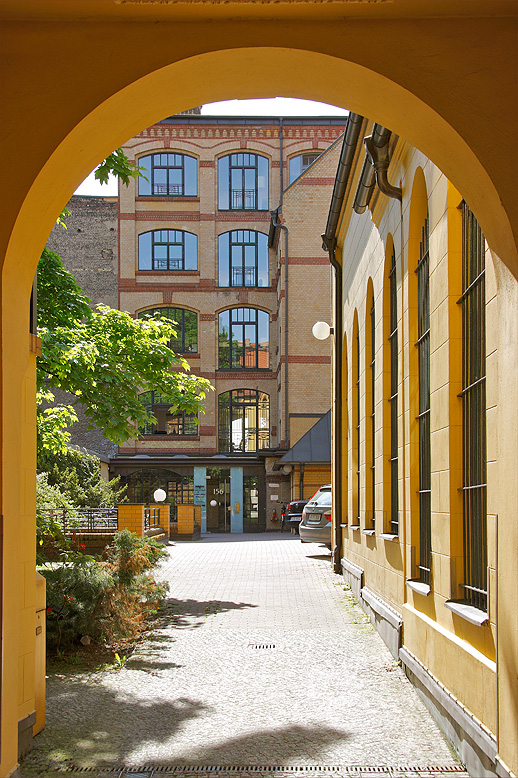
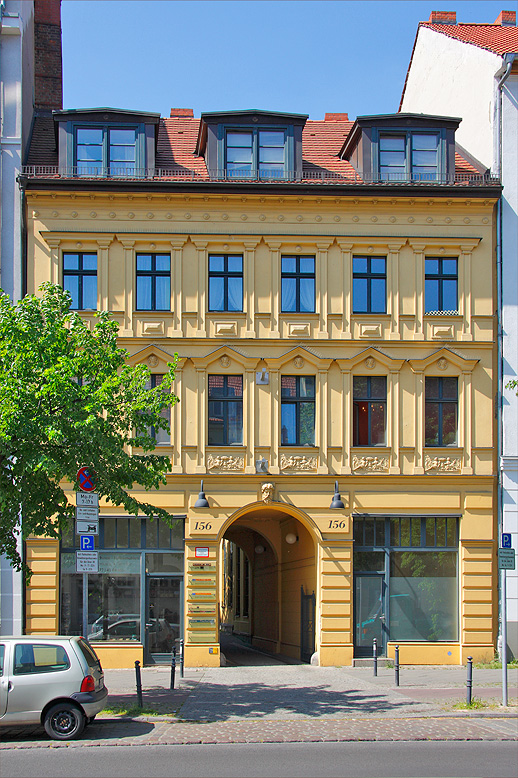
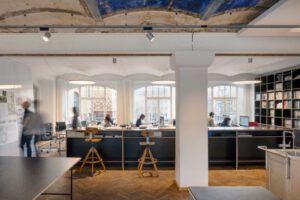
For our office location in Berlin, we have transformed an old piano factory in Berlin-Mitte into a residential and office building, giving it a new lease on life.

In doing so, our goal was to intensify the existing qualities while also meeting contemporary demands for living and working.

Data

Completion

2011

Address

Brunnenstraße 156
10115 Berlin
Deutschland

Client

PETERSENARCHITEKTEN
Gesellschaft für Architektur
+ urbane Strategien mbh